

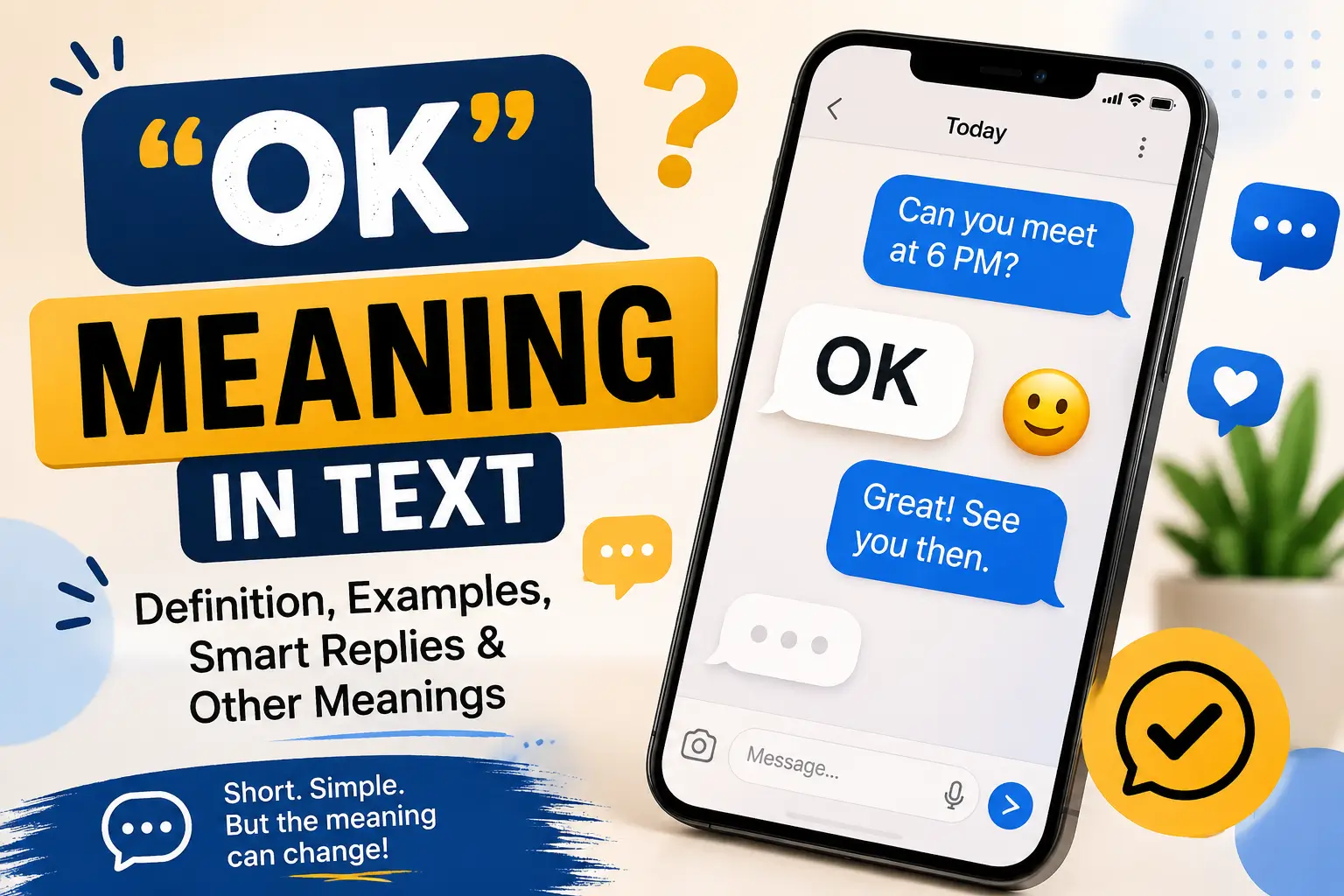
Ok meaning in text is usually okay. If someone sends OK in a text message, they often mean they understand, agree, accept something, or are fine with what you said.
However, this small abbreviation can feel different based on context and tone. For example, “OK!” may sound friendly, while “ok.” can feel cold or serious. You may see it in Snapchat, Instagram, TikTok, DMs, group chats, and everyday online conversations.
In simple words, OK is a quick reply people use when they do not need to write much. Still, it helps to know how it is being used. So, below you will quickly understand its meaning, real examples, smart replies, and other possible meanings.
Read this also: onm meaning in text: What ONM Means and How to Use It
Quick Answer: What Does OK Mean?
OK means “okay” in text messages and online chats. It is used to show that someone agrees, understands, accepts something, or is fine with a plan. In most cases, OK is simple and neutral. However, depending on tone, punctuation, and context, it can also sound dry, serious, or slightly annoyed.
Quick Facts About OK
| Topic | Details |
| Abbreviation | OK |
| Common Meaning | Okay |
| Used In | Texts, Snapchat, Instagram, TikTok, group chats, dating apps |
| Tone | Neutral, casual, sometimes dry |
| Best For | Agreeing, confirming, accepting, or showing understanding |
| Example | “OK, I’ll be there at 6.” |
| Can It Have Other Meanings? | Yes, depending on context |
What Does OK Mean in Text?
OK in texting means “okay.” It is one of the most common short replies people use in messages. You may see it as “OK,” “ok,” “okay,” or “k.”
In simple words, OK means the person understands or accepts what was said. For example, if someone says, “Meet me at 5,” you might reply, “OK.” That means you agree with the plan.
However, OK can also show mood. A simple “ok” may sound casual. On the other hand, “OK.” with a period can feel serious or cold. Because of this, you should always check the full conversation before guessing the tone.
How People Use OK in Conversations
People use OK in many casual places online. The meaning is usually the same, but the feeling can change.
In text messages, OK is often used to confirm something. For example, “OK, I’ll call you later.”
On Snapchat, OK can mean someone saw your message and accepted it. Still, a short “ok” may feel less excited.
On Instagram, people may use OK in DMs or comments to agree with someone. For example, “OK, that outfit is actually nice.”
On TikTok, OK is often used in comments to react to a video. For example, “OK, this is funny.”
In group chats, OK helps people respond quickly without writing a long message.
In dating chats, OK can be tricky. A warm “ok sounds good 😊” feels friendly. However, a plain “ok” may seem uninterested.
In friendly conversations, OK is simple and normal. It usually means “got it” or “that works.”
Examples of OK in Text Messages
Example 1:
Person A: Can you come at 7?
Person B: OK.
This means Person B agrees with the time.
Example 2:
Person A: I’ll send the notes tonight.
Person B: Ok, thanks.
Here, OK means the person understands and appreciates it.
Example 3:
Person A: Sorry, I’m running late.
Person B: OK, no problem.
In this case, OK sounds calm and polite.
Example 4:
Person A: I don’t want to talk right now.
Person B: OK.
Here, OK may sound serious, but it also shows respect.
Example 5:
Person A: Let’s watch a movie later.
Person B: Ok sounds fun.
This means the person agrees and likes the idea.
Example 6:
Person A: I changed the plan again.
Person B: ok…
This may show confusion, doubt, or slight annoyance.
Example 7:
Person A: I’ll pick you up after work.
Person B: OK, see you then.
Here, OK confirms the plan.
Example 8:
Person A: You forgot to reply yesterday.
Person B: OK, sorry about that.
In this situation, OK shows acknowledgment.
Example 9:
Person A: I think we should stop arguing.
Person B: OK, I agree.
This means the person accepts the idea.
Example 10:
Person A: That was not cool.
Person B: Ok.
This can sound dry, defensive, or upset.
How to Reply to OK
Your reply depends on the situation. Since OK can be neutral or emotional, read the message carefully first.
Friendly Reply
You can say:
“Great, see you then.”
“Thanks!”
“Perfect, I’ll text you later.”
Casual Reply
You can reply with:
“Cool.”
“Sounds good.”
“Alright.”
Flirty Reply
You can say:
“Ok good 😊”
“Can’t wait.”
“OK, but only because it’s you.”
Confused Reply
If you are unsure about the tone, ask clearly:
“Are you okay?”
“Did that sound fine to you?”
“Just checking, are we good?”
Polite Reply
For a polite tone, use:
“Thank you.”
“Okay, I understand.”
“Sure, that works for me.”
Funny Reply
You can keep it light with:
“OK boss.”
“Okie dokie.”
“Approved by the OK department.”
Other Possible Meanings of OK
Most of the time, OK means “okay.” However, it can have other meanings in certain places. Context matters a lot.
| Meaning | Where It Is Used | Example | How to Understand It |
| Okay | Texting and social media | “OK, I’ll do it.” | Agreement or understanding |
| Approval | Plans and decisions | “That design is OK.” | Something is acceptable |
| Not great, not bad | Reviews or opinions | “The food was OK.” | Average or decent |
| Oklahoma | Addresses or locations | “Tulsa, OK” | Refers to the US state |
| Cold response | Emotional chats | “Ok.” | May show annoyance or distance |
OK Meaning on Snapchat, Instagram, and TikTok
OK meaning on Snapchat is usually the same as in texting. It means “okay,” “got it,” or “I understand.” However, Snapchat chats are often quick, so a short “ok” may feel normal.
On Instagram, OK can appear in DMs, comments, and story replies. For example, someone may say, “OK, this look is amazing.” In that case, OK adds emphasis.
On TikTok, OK is often used as a reaction. For example, “OK this trend is actually funny.” Here, it can show surprise, approval, or interest.
Still, slang depends on the person. Tone, emojis, punctuation, and the topic all affect the meaning.
Emotional or Practical Meaning of OK
OK can be practical or emotional. In a practical way, it confirms a plan or shows understanding. For example, “OK, I’ll bring the tickets” is clear and useful.
Emotionally, OK can feel different. “OK!” may sound excited. “Ok.” may feel cold. Meanwhile, “ok…” may show doubt or discomfort. So, the small details matter.
How OK Is Used in Daily Life
People use OK every day because it is short and easy. It works in quick texts, plans, reminders, and casual replies.
For example, you can use OK when someone gives instructions. You can also use it when agreeing to meet, accepting an idea, or ending a small conversation.
That said, OK is not always the warmest reply. If you want to sound friendly, add a few extra words. “OK, sounds good” feels better than only “ok.”
Is OK Formal or Informal?
OK is mostly casual, but it can work in some professional settings too.
With friends, OK is completely normal. On social media, it is also fine in comments, DMs, and replies.
On dating apps, OK can work, but it may sound low-effort if used alone. Instead, write something warmer like, “OK, sounds good 😊.”
In work emails, OK is usually too casual by itself. It is better to write “Okay, thank you” or “That works for me.”
For school assignments, avoid using OK unless it fits the style. In professional messages, use complete sentences when possible.
Common Mistakes People Make With OK
One common mistake is thinking OK always means someone is mad. That is not true. In most cases, it simply means “okay.”
Another mistake is ignoring punctuation. “OK!” feels more excited than “OK.” Also, “ok…” can sound unsure.
Some people also reply too quickly without checking the context. Before you answer, look at the message before it. This helps you understand the tone.
Finally, avoid using only “OK” in serious conversations. It may seem cold. Instead, add a short sentence to sound more caring.
Similar Text Abbreviations and Slang
| Slang Term | Meaning | How It Is Different From OK |
| K | Okay | Shorter and can sound rude |
| KK | Okay, okay | More friendly than K |
| Alright | Fine or agreed | Sounds more complete |
| Bet | Yes, agreed | More casual and slangy |
| Sure | Yes or okay | Can sound polite or unsure |
| Mhm | Yes or I agree | More like a sound response |
| Gotcha | I understand | More direct than OK |
| Cool | That works | More relaxed and friendly |
Easy Way to Remember OK
The easiest way to remember OK is to think of it as “okay.” If someone sends OK, they usually mean, “I understand,” “I agree,” or “that works.”
However, if the message feels cold, check the punctuation. A plain “ok” may just be quick, but “OK.” can feel more serious.
See this also: LBVS Meaning in Text: What It Means and How to Reply
FAQs About OK Meaning in Text
Q1. What does OK mean in texting?
OK means “okay” in texting. It usually shows agreement, understanding, or acceptance. For example, if someone says, “Call me later,” replying “OK” means you understand.
Q2. What does OK mean on Snapchat?
On Snapchat, OK usually means “okay” or “got it.” People use it to reply quickly in chats. However, a short “ok” may feel dry if the conversation is emotional.
Q3. What does OK mean on Instagram?
On Instagram, OK can mean agreement, approval, or reaction. For example, “OK, this outfit is cute” means the person likes it. In DMs, it often means the same as “okay.”
Q4. Is OK rude in text?
OK is not always rude. In most cases, it is neutral. However, “OK.” with a period or a plain “ok” in a serious chat can feel cold.
Q5. How do I reply to OK?
You can reply based on the mood. If it is casual, say “Cool” or “Sounds good.” If it seems cold, ask, “Are we good?” or “Is everything okay?”
Q6. Can OK have more than one meaning?
Yes, OK can have more than one meaning. It can mean agreement, approval, average, or even Oklahoma in addresses. The best way to understand it is to read the full context.
Q7. What does OK stand for?
In everyday texting, OK stands for “okay.” Most people do not think of it as a formal abbreviation when they text. They simply use it as a quick way to agree or respond.
Conclusion
ok meaning in text is simple in most cases. It means “okay,” and people use it to agree, confirm, accept, or show they understand. However, context matters. A friendly “OK!” feels different from a cold “Ok.” So, always check the tone, punctuation, and conversation before replying. In short, OK is useful, common, and easy to understand. When you want to sound warmer, just add a few extra words after it.
1 thought on “OK Meaning in Text: What Does OK Mean in Texting and Social Media?”