
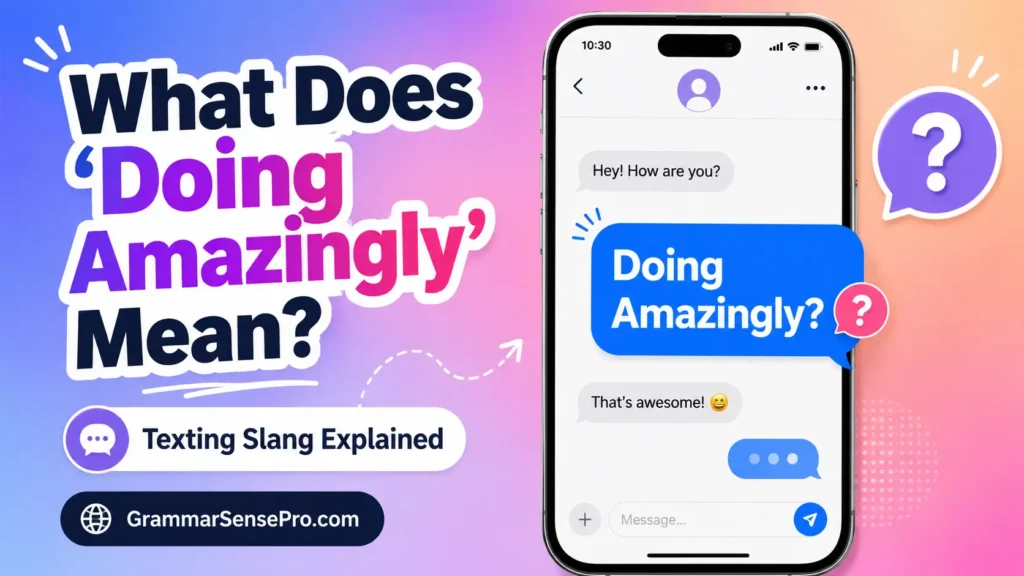

Doing amazingly in slang can be expressed with phrases like “killing it,” “crushing it,” “slaying,” or “being on fire.” These expressions mean you are performing extremely well, succeeding, or making a strong impression.
However, the best phrase depends on the context, tone, and conversation. You may see these terms in a text message, Snapchat chat, Instagram comment, TikTok video, DM, or group conversation. For example, “you crushed it” fits a presentation, while “you ate” is more common for fashion, dancing, or creative content.
So, choose the phrase that matches the situation and the person you are talking to. Below, you will quickly learn the most popular expressions, their meanings, real examples, natural replies, and common mistakes to avoid when using this social media slang.
Quick Answer: How Do You Say Doing Amazingly in Slang?
Common slang phrases for doing amazingly include “killing it,” “crushing it,” “slaying,” “on fire,” “cooking,” and “you ate.” They all praise someone for performing extremely well. However, some phrases fit work or sports, while others are more common in fashion, entertainment, and social media.
Quick Facts About Doing Amazingly in Slang
| Quick Fact | Answer |
| Most Common Phrase | Killing it |
| Similar Meaning | Performing extremely well |
| Used In | Texts, social media, sports, work, school, and casual chats |
| Tone | Positive, excited, supportive, or playful |
| Best For | Praising success, confidence, talent, or progress |
| Example | “You’re killing it at your new job!” |
| Can It Be Said Differently? | Yes, such as “crushing it,” “slaying,” or “on fire” |
What Does Doing Amazingly Mean in Slang?
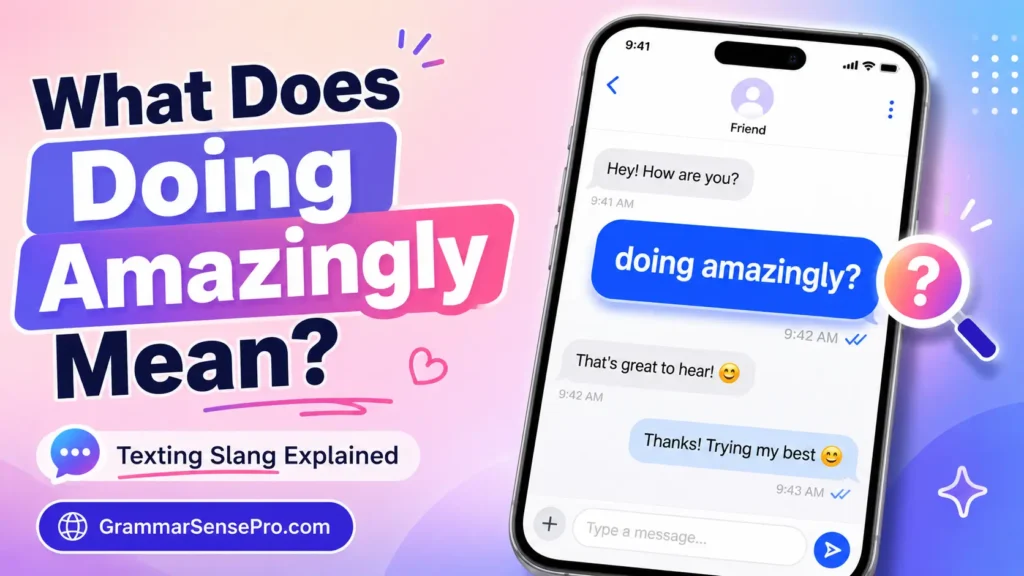
In slang, doing amazingly means that someone is performing much better than expected. They may be succeeding at work, looking confident, playing well, or making fast progress.
For example:
“You’re killing it in that new role.”
This means the person is doing extremely well at work.
Another example is:
“She slayed that performance.”
Here, slayed means she performed in an impressive and confident way.
These phrases usually carry a positive and supportive tone. Still, the right choice depends on what the person is doing.
Read this also: GFN Meaning in Text: What It Means and How to Reply
Popular Slang Phrases for Doing Amazingly
Killing It
Killing it is one of the most common phrases. It means doing something extremely well.
“You’re killing it at the gym lately.”
Crushing It
Crushing it means succeeding completely or giving an excellent performance.
“He crushed it during the interview.”
Slaying
Slaying often praises confidence, style, beauty, or a strong performance.
“You are slaying in that outfit.”
On Fire
Someone who is on fire keeps performing well, often several times in a row.
“She has scored three goals. She’s on fire!”
Cooking
If someone is cooking, they are focused, creating something impressive, or performing well.
“Let him cook. He knows what he’s doing.”
Ate
Ate means someone did something perfectly or impressively.
“She ate that dance performance.”
A stronger version is:
“She ate and left no crumbs.”
In the Zone
Being in the zone means someone is fully focused and performing at their best.
“Don’t interrupt him. He’s in the zone.”
Owning It
Owning it means acting with confidence and control.
“You were nervous, but you owned that presentation.”
How People Use These Phrases in Conversations
Text Messages
Friends often use “killing it” or “crushing it” to offer support.
“I saw your results. You’re crushing it!”
Snapchat
Short praise such as “You ate” or “Slay” is common after someone posts a photo.
“That outfit is perfect. You ate!”
Comments often praise style, beauty, fitness, or achievements.
“You’re absolutely slaying this look.”
TikTok Comments
TikTok users may write “She ate,” “Let him cook,” or “You killed that.”
“The dance was perfect. She ate and left no crumbs.”
Group Chats
Friends may celebrate someone’s achievement with an excited message.
“Another top score? You’re on fire!”
Dating Chats
A flirty compliment may praise confidence or appearance.
“You’re slaying in that picture 😍”
Friendly Conversations
Simple phrases such as “You killed it” work in many casual situations.
“Your speech was great. You killed it!”
Examples of Doing Amazingly in Slang
Example 1
Person A: I got promoted today!
Person B: That’s amazing. You’re killing it!
“Killing it” praises the person’s career success.
Example 2
Person A: How did my presentation sound?
Person B: You crushed it. Everyone looked impressed.
“Crushed it” means the presentation went extremely well.
Example 3
Person A: Do you like my outfit?
Person B: Yes! You’re slaying.
“Slaying” praises the person’s style and confidence.
Example 4
Person A: I scored again!
Person B: You’re on fire today!
“On fire” means the player is performing well repeatedly.
Example 5
Person A: I finally finished the design.
Person B: You cooked with this one.
“Cooked” means the person created something impressive.
Example 6
Person A: Did you watch her performance?
Person B: Yes, she ate and left no crumbs.
The phrase means she performed almost perfectly.
Example 7
Person A: I answered every question correctly.
Person B: You absolutely nailed it!
“Nailed it” means the task was completed successfully.
Example 8
Person A: I was so nervous before the interview.
Person B: It didn’t show. You owned it.
“Owning it” means acting confidently and staying in control.
Example 9
Person A: I have written five pages without stopping.
Person B: Keep going. You’re in the zone!
“In the zone” means the person is highly focused.
Example 10
Person A: My business had its best month ever.
Person B: You’re doing numbers!
“Doing numbers” means achieving strong results, especially in sales, views, or streams.
How to Reply When Someone Says You Are Doing Amazingly
Friendly Reply
“Thank you! That means a lot.”
Casual Reply
“Thanks! I’m trying my best.”
Flirty Reply
“I had to impress you somehow 😉”
Humble Reply
“Thank you. I still have a lot to learn.”
Polite Reply
“I really appreciate your support.”
Funny Reply
“Finally, my main character moment!”
Different Slang Phrases and Their Meanings
| Slang Phrase | Where It Is Used | Example | How to Understand It |
| Killing it | Work, school, fitness, and daily life | “You’re killing it lately.” | Performing extremely well |
| Crushing it | Work, sports, and goals | “She crushed the interview.” | Succeeding strongly |
| Slaying | Fashion, beauty, and performances | “You’re slaying that look.” | Looking or performing impressively |
| On fire | Sports, games, and repeated success | “He’s on fire tonight.” | Having a strong winning streak |
| Cooking | Gaming, creativity, and social media | “Let her cook.” | Allowing someone skilled to continue |
| Ate | TikTok, Instagram, fashion, and entertainment | “She ate that performance.” | Doing something almost perfectly |
| Nailed it | Work, school, and practical tasks | “You nailed the answer.” | Completing something correctly |
| In the zone | Sports, studying, and creative work | “He’s in the zone.” | Being fully focused |
Doing Amazingly in Slang on Snapchat, Instagram, and TikTok
On Snapchat, quick compliments such as “slay,” “you ate,” and “you killed it” are common. They may respond to an outfit, selfie, or achievement.
Instagram comments often focus on appearance, confidence, and lifestyle. For example, someone may write, “You’re slaying this look.”
Meanwhile, TikTok uses phrases such as “ate,” “left no crumbs,” “let them cook,” and “understood the assignment.” These expressions often praise videos, dances, jokes, outfits, or creative ideas.
The meaning is usually positive. However, tone and context still matter because some comments may be sarcastic.
Emotional or Practical Meaning
These phrases do more than describe success. They also show excitement, pride, encouragement, or admiration.
For example:
“You’re killing it. Keep going!”
This message supports someone who is making progress.
A practical compliment may focus on a clear result:
“You crushed your sales goal this month.”
An emotional compliment may focus on confidence:
“You’re glowing and slaying lately.”
How These Phrases Are Used in Daily Life
You can use these expressions when someone gets good grades, wins a game, reaches a fitness goal, or performs well at work.
For example:
“Three new clients this week? You’re killing it.”
They also work when praising style or creativity:
“That design is beautiful. You ate.”
Still, choose a phrase that sounds natural for the situation. “Crushed it” fits a job interview better than “ate and left no crumbs.”
Are These Slang Phrases Formal or Informal?
Most of these expressions are informal.
They are suitable for:
- Texts with friends
- Social media comments
- Group chats
- Dating apps
- Casual workplace conversations
- Supportive messages
Avoid highly trendy phrases in:
- Formal work emails
- Academic assignments
- Business reports
- Legal documents
- Messages to unfamiliar clients
In professional writing, use phrases such as “performed exceptionally well,” “achieved excellent results,” or “exceeded expectations.”
Common Mistakes People Make
One mistake is using “cooked” instead of “cooking.” If someone is cooking, they are often doing well. If someone is cooked, they may be exhausted, defeated, or in trouble.
Another mistake is using “slay” in a very formal setting. Although positive, it may sound too casual for professional communication.
Also, “you killed it” is praise, but “you killed it” can sound literal without clear context. Use it around a task, performance, or achievement.
Finally, do not force every trendy phrase into a conversation. A simple “You did great” may sound more natural.
Similar Slang Terms
| Slang Term | Meaning | How It Is Different |
| Nailed it | Did something correctly | Focuses on accurate execution |
| Popping off | Performing with high energy | Often used for games or performances |
| Doing numbers | Getting strong measurable results | Often refers to views, sales, or streams |
| Going off | Performing strongly or speaking with energy | Can also describe anger |
| In your bag | Working confidently in your area of skill | Focuses on personal talent |
| Main character energy | Acting confident and noticeable | Focuses more on attitude |
| Understood the assignment | Delivered exactly what was needed | Praises the final result |
| Built different | Unusually talented or strong | Suggests someone stands above others |
Easy Way to Remember the Phrases
Match the phrase to the situation:
- Work or school: Crushing it
- Sports or gaming: On fire
- Fashion or confidence: Slaying
- Creative performance: Ate
- Strong focus: In the zone
- General success: Killing it
When unsure, “You’re killing it” is a safe and widely understood choice.
Read this also: What’s Snowball Kissing? Meaning, Origin, Slang Definition, Safety, and Common Misconceptions
FAQs About Doing Amazingly in Slang
You can say “killing it,” “crushing it,” or “slaying.” Each phrase means someone is doing extremely well.
It means you are performing very well or making impressive progress. It is usually a positive compliment.
“You ate” means you did something impressively or almost perfectly. It is common when praising fashion, dancing, singing, or online content.
Yes, slaying is usually a strong compliment. It can praise someone’s appearance, confidence, talent, or performance.
It means allowing someone to continue because they may produce a good result. People often use it in gaming, sports, jokes, and creative conversations.
Yes, it works in friendly workplace conversations. However, use more formal language in reports, official emails, or messages to unfamiliar clients.
You can say, “Thank you, I appreciate that,” or “Thanks, I’ve been working hard.” A simple and sincere reply works best.
Conclusion
Doing amazingly in slang can be expressed as “killing it,” “crushing it,” “slaying,” “on fire,” or “you ate.” Each phrase praises strong performance, confidence, or success. However, the best choice depends on the platform, relationship, and situation. Use casual slang with friends and clearer language in formal settings. When in doubt, “You’re killing it” is a natural and widely understood compliment.

Pingback: Moreso Meaning: Simple Definition & Examples
Pingback: ASF Meaning in Text: Definition, Examples & Replies
Pingback: FRL Meaning TikTok: What It Means & How to Reply